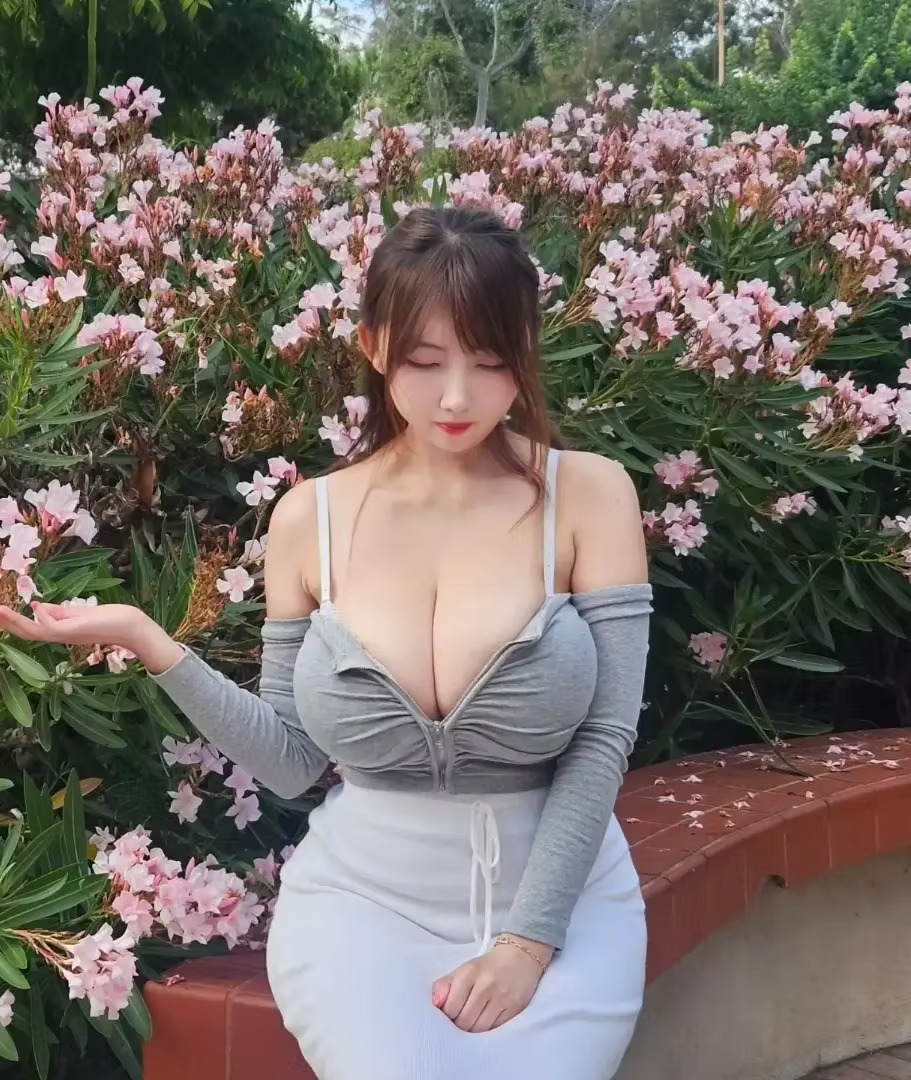
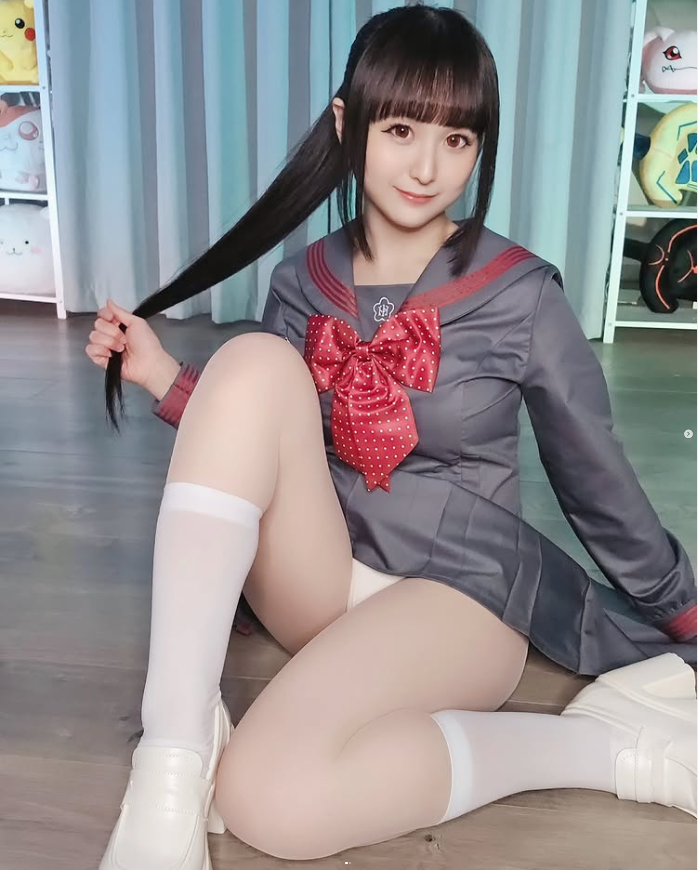
Velvet Tube

Velvet Tube

Tiktok

Official Link ↗

In an era where most creators chase algorithmic spikes and manufactured controversy, South Korean broadcaster Velvet Tube has built her audience the old-fashioned way: by showing up consistently, staying candid, and letting her audience grow organically across two continents. Operating under the handle 벨벳튜브, she represents a specific generation of streamers who came of age during Twitch’s expansion beyond gaming, carving out a space that is part diary, part hangout, and part cultural exchange.

Velvet Tube’s origin story begins in South Korea, where she was born and raised, but the foundation of her digital career was laid thousands of miles away. After relocating to Canada, she found herself in a position familiar to many young expatriates: navigating a new environment while staying connected to home. It was during this Canadian chapter that she launched her primary YouTube channel on November 4, 2018. The timing was notable. By late 2018, Twitch was already a proven platform for gamers, but its “Just Chatting” and IRL categories were still finding their footing. Velvet entered this evolving landscape not with a massive production budget or a management team, but with a webcam, a willingness to share her daily routine, and the natural curiosity of someone living between two cultures.

Her early content strategy was straightforward. She began uploading recordings of her Twitch broadcasts to YouTube in early 2019, creating a symbiotic relationship between her live and archived content. This approach served two purposes. First, it gave her existing Twitch community a place to rewatch moments they had missed. Second, it allowed YouTube’s search and discovery algorithms to surface her content to viewers who might never have visited Twitch. For a creator building an international audience, this cross-platform visibility was essential. While many Korean streamers of the same era focused almost exclusively on domestic platforms like AfreecaTV or later Chzzk, Velvet’s time in Canada had given her an English-speaking viewership that demanded a different kind of accessibility.

The content itself resisted easy categorization then, and it still does today. On Twitch, she is most commonly found in the “Just Chatting” category, where the format is intentionally loose. Conversations drift from topic to topic, shaped by chat interaction and whatever is on her mind that day. But limiting her to talk streams would be inaccurate. Her broadcasts regularly incorporate dancing, casual gaming sessions, cooking segments, art creation, and outdoor IRL streams. This variety is not the result of a calculated content calendar designed to maximize retention metrics; rather, it reflects a creator who treats her channel as a living space rather than a product line. One evening she might be preparing a meal and discussing grocery prices in Seoul; the next, she could be walking through a neighborhood market with a camera in hand, narrating her surroundings for viewers scattered across North America, Europe, and Asia.

This international composition of her audience is one of the more distinctive elements of her brand. Because she built her initial following while physically located in Canada, her community developed across time zones and language barriers from the very beginning. She did not have to retrofit her content for a global market; her market was global by accident. Even after returning to South Korea, she maintained this borderless community rather than pivoting to a purely domestic strategy. The result is a chat environment and comment section that often resembles a digital hostel common room, where Korean, English, and hybrid expressions coexist without the rigid segmentation seen on many regional channels.

Her Twitch trajectory was not without interruption. In April 2020, her channel was banned from the platform, forcing a hiatus that lasted over a year. The specifics of the ban remain standard platform administrative history, but the gap in her streaming career was significant. Many creators who lose momentum for that length of time struggle to rebuild. Velvet returned in October 2021 and gradually resumed her schedule, picking up where she had left off without a dramatic rebranding or apology tour. The quiet resilience of that return says something about the loyalty of her core audience and the durability of a brand built on personality rather than trend-chasing.

On YouTube, her output shifted toward vlogging as her circumstances changed. Returning to South Korea provided a natural content well: the documentation of rediscovery. Her videos capture street scenes, food culture, transit systems, and the small textures of daily life that are invisible to tourists but meaningful to locals who have been away. These vlogs function as both personal time capsules and proxy travel experiences for viewers who may never visit East Asia. The production style is unpretentious. There are no rapid-fire cuts, no thumbnail faces contorted in synthetic shock, no clickbait titles promising life-changing revelations. The titles are descriptive; the thumbnails are clean. It is content made by someone who seems to trust that the subject matter itself is enough.

Away from the metrics and the platforms, Velvet has allowed small windows into her offline life. She has a younger brother who has appeared on stream occasionally, not as a co-host or gimmick, but as a natural extension of her environment. Her affection for animals has been a recurring, understated theme. During her Canadian years, she cared for two cats: a brown cat named Mr. Tib and a grey cat named Miss Gib. After her return to Korea, she welcomed a dog into her life, a Cocker Spaniel-Poodle mix named Latte. These details are not leveraged for viral pet content or merchandise lines; they surface organically during streams and vlogs, the way pets surface in any normal household.

She also maintains a secondary YouTube channel, created in late 2020, though it operates more like a sketchbook than a second storefront. The posting schedule there is sporadic, suggesting it serves as an outlet for content that does not fit the rhythm of her main channel. This kind of informal dual-channel setup is common among creators who started before the professionalization wave of the mid-2020s, when every platform asset was expected to be fully monetized and optimized. For Velvet, the secondary channel appears to be a sandbox, not a strategy.

What defines her, then, is not a single viral moment or a dramatic narrative arc. It is the cumulative effect of years of unhurried broadcasting. She is not a reaction streamer mining drama for clips. She is not a speedrunner or an esports competitor. She is not a lifestyle influencer staging perfection for brand partnerships. She occupies a middle space that has become increasingly rare: the generalist independent creator who treats streaming as a long-term practice rather than a launchpad. Her audience knows her voice, her pacing, her apartment layout, her dog’s bark. That level of casual intimacy is difficult to manufacture and nearly impossible to fake.

Today, Velvet Tube continues to broadcast from South Korea, maintaining the same cross-platform presence she established years ago. Her YouTube vlogs document the country she returned to; her Twitch streams provide the real-time interaction that video alone cannot replicate. The viewership is modest by superstar standards but durable by any meaningful metric. In a content economy obsessed with overnight virality and platform hopping, her career is a reminder that consistency, geographic authenticity, and a willingness to simply share your day can still build something lasting.

For a model site profiling creators who have found their lane without industry machinery or manufactured hype, Velvet Tube is a solid subject. She is a broadcaster, a documentarian of her own life, and a case study in how to maintain an international audience without losing your grounding in the process.

Videos